
 English
 Pусский
 Tiếng Việt
 中文
中文

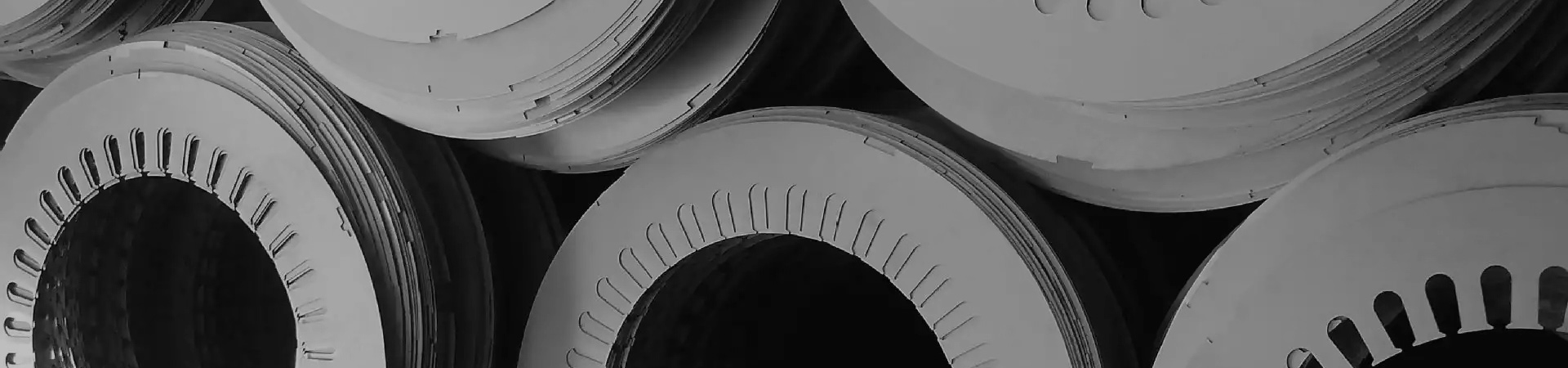
모터 고정자 제조 공정
Motor Stator Manufacturing Process The stator is a critical component of an electric motor, consisting of a laminated core and windings that generate a rotating magnetic field when energized. The manufacturing process involves several precise steps to ensure high performance, efficiency, and durability. Below is an overview of the key stages in motor stator production. 1. Core Lamination Manufacturing The stator core is made from thin electrical steel laminations to minimize eddy current losses. The process begins with: - Material Selection: High-grade silicon steel sheets are chosen for their low hysteresis loss and high magnetic permeability. - Punching or Laser Cutting: The sheets are stamped or laser-cut into precise shapes (typically circular with slots) using progressive dies or CNC machines. - Deburring and Cleaning: The laminations are deburred to remove sharp edges and cleaned to eliminate contaminants that could affect performance. 2. Stacking and Bonding The individual laminations are stacked to form the stator core. Methods include: - Interlocking: Some laminations feature tabs that lock them together mechanically. - Welding or Gluing: Stacks may be welded at the edges or bonded with adhesives for structural integrity. - Heat Treatment: Some cores undergo annealing to relieve stress and improve magnetic properties. 3. Winding Insertion Copper or aluminum wire windings are inserted into the stator slots to create electromagnetic coils. Techniques include: - Manual or Automated Winding: Pre-formed coils are wound using machines or hand-placed in smaller batches. - Needle Winding: For concentrated windings, a needle injects wire directly into the slots. - Hairpin Winding: Pre-bent rectangular wires (hairpins) are inserted and laser-welded for high-efficiency motors. 4. Insulation and Impregnation To prevent short circuits and enhance durability: - Slot Liners: Insulating paper or films are placed in the slots before winding. - Varnish or Resin Dip: The stator is dipped or vacuum-pressure impregnated (VPI) with insulating varnish to secure windings and improve heat dissipation. - Curing: The stator is baked to harden the varnish and ensure a robust bond. 5. Final Assembly and Testing - Termination: Winding ends are connected to terminal blocks or busbars. - Quality Checks: Tests include resistance measurement, hi-pot (dielectric strength), and surge testing to detect faults. - Integration: The stator is assembled with the rotor and housing to complete the motor. Conclusion The stator manufacturing process combines precision engineering with advanced materials to produce a reliable and efficient component. Each step—from lamination stacking to winding and insulation—is critical to ensuring optimal motor performance. Automation and stringent quality control further enhance consistency, making modern stators key to high-performance electric motors. (Word count: 498)
제품
범주:
검색 결과가 없습니다!
뉴스
범주:
-
[Industry News]EV에 고품질 모터 고정자를 사용하면 얻을 수 있는 이점
2025-10-07 16:26:52 -
[Company News]HVAC 시스템에 적합한 모터 고정자를 선택하기 위한 팁
2025-10-08 09:01:33
케이스
범주:
검색 결과가 없습니다!
비디오
범주:
검색 결과가 없습니다!
다운로드
범주:
검색 결과가 없습니다!
모집
범주:
검색 결과가 없습니다!
추천 제품
검색 결과가 없습니다!
 모바일: +86 13738592999
 전화: +86(576) 89307999
 이메일: sales@zjxinzheng.com
 주소: 삼문 해안공업도시



 왓츠앱
왓츠앱 핸드폰
핸드폰