
 English
 Pусский
 Tiếng Việt
 中文
中文

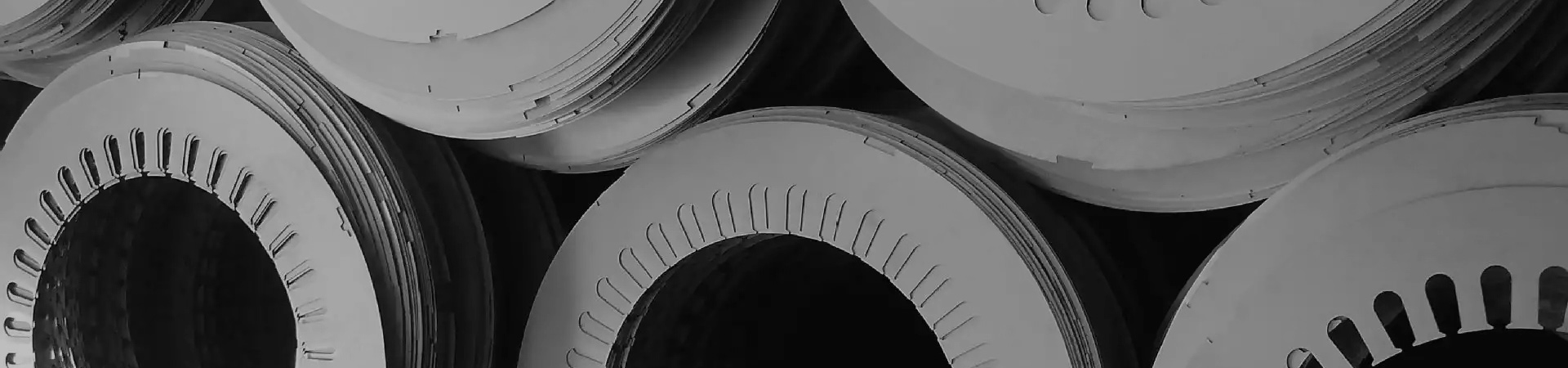
모터 로터 재료
Motor Rotor Materials: Properties and Applications The rotor is a critical component of an electric motor, responsible for converting electrical energy into mechanical motion. The choice of rotor material significantly impacts motor performance, efficiency, durability, and cost. Common rotor materials include laminated electrical steel, copper, aluminum, and permanent magnets, each offering distinct advantages based on application requirements. 1. Laminated Electrical Steel (Silicon Steel) Laminated electrical steel is the most widely used material for rotor cores in induction and synchronous motors. It consists of thin steel sheets coated with an insulating layer to reduce eddy current losses. The addition of silicon (typically 2-3%) increases electrical resistivity, further minimizing energy losses due to hysteresis and eddy currents. Advantages: - High magnetic permeability for efficient flux conduction. - Low core losses, improving energy efficiency. - Cost-effective and widely available. Applications: - AC induction motors (squirrel cage rotors). - Synchronous reluctance motors. 2. Copper and Aluminum (Conductors) In induction motors, rotor conductors are typically made of copper or aluminum. Copper offers higher conductivity and better thermal performance but is more expensive. Aluminum is lighter and cheaper but has higher resistivity, leading to slightly lower efficiency. Advantages of Copper: - Superior electrical conductivity, reducing resistive losses. - Better heat dissipation, enhancing motor lifespan. Advantages of Aluminum: - Lower cost and weight, suitable for budget-sensitive applications. - Easier to cast in complex rotor designs (e.g., die-cast squirrel cages). Applications: - Squirrel cage rotors in induction motors. - Wound rotors in slip-ring motors (copper windings). 3. Permanent Magnet Materials Permanent magnet rotors are used in brushless DC (BLDC) and synchronous motors, eliminating the need for rotor windings. Common magnet materials include: - Neodymium Iron Boron (NdFeB): Offers the highest energy density, excellent coercivity, and thermal stability but is costly and prone to corrosion. - Samarium Cobalt (SmCo): Performs well at high temperatures but is expensive and less commonly used. - Ferrite (Ceramic) Magnets: Cheaper but with lower magnetic strength, suitable for low-cost applications. Advantages: - High efficiency due to no rotor losses. - Compact and lightweight design. Applications: - High-performance motors in EVs, drones, and industrial automation. 4. Composite and Advanced Materials Emerging materials like soft magnetic composites (SMCs) and amorphous metals are being explored for rotors. SMCs offer isotropic magnetic properties and reduced eddy current losses, while amorphous metals provide extremely low core losses. Advantages: - Potential for higher efficiency and lighter designs. - 3D flux paths enable innovative motor geometries. Applications: - High-frequency motors and specialized industrial systems. Conclusion The selection of rotor materials depends on factors such as efficiency targets, cost constraints, operating environment, and performance requirements. Laminated steel remains dominant for traditional motors, while permanent magnets are favored in high-efficiency applications. Ongoing material advancements continue to push the boundaries of motor performance, enabling lighter, more efficient, and sustainable solutions.
제품
범주:
검색 결과가 없습니다!
뉴스
범주:
-
[Company News]모터 코어 재료 및 선택 기준 안내
2025-10-07 16:10:40 -
[FAQ]적절한 모터 로터 정렬의 중요성
2025-10-08 08:50:04
케이스
범주:
검색 결과가 없습니다!
비디오
범주:
검색 결과가 없습니다!
다운로드
범주:
검색 결과가 없습니다!
모집
범주:
검색 결과가 없습니다!
추천 제품
검색 결과가 없습니다!
 모바일: +86 13738592999
 전화: +86(576) 89307999
 이메일: sales@zjxinzheng.com
 주소: 삼문 해안공업도시



 왓츠앱
왓츠앱 핸드폰
핸드폰