
 English
 Pусский
 Tiếng Việt
 中文
中文

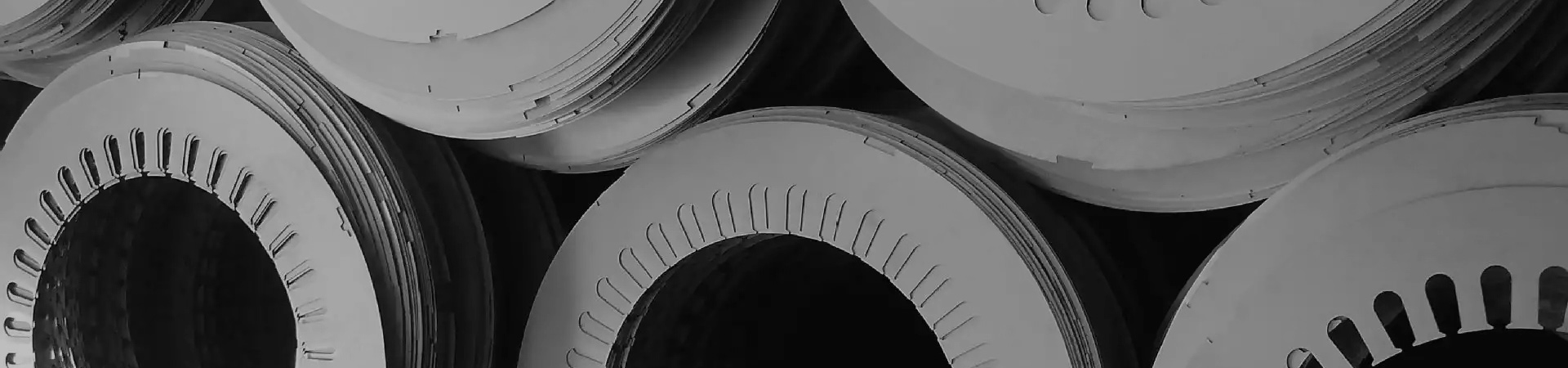
모터 로터 설계 최적화
Motor Rotor Design Optimization Motor rotor design optimization is a critical process in enhancing the performance, efficiency, and reliability of electric motors. The rotor, as the rotating component of the motor, significantly influences torque production, energy losses, thermal management, and overall system dynamics. Optimizing its design involves balancing multiple factors, including material selection, geometry, electromagnetic properties, and mechanical constraints. Key Optimization Objectives 1. Efficiency Improvement – Reducing energy losses (e.g., eddy currents, hysteresis losses) by selecting high-permeability, low-loss materials such as silicon steel or advanced composites. Lamination thickness and stacking techniques also play a role in minimizing core losses. 2. Torque Enhancement – Optimizing rotor geometry (e.g., pole shape, air gap, and flux barriers) to maximize torque density while minimizing cogging torque and ripple. Permanent magnet (PM) rotors require careful placement and magnetization patterns to enhance flux linkage. 3. Thermal Management – Efficient heat dissipation is crucial to prevent demagnetization (in PM motors) and insulation degradation. Rotor cooling methods, such as internal air channels or liquid cooling, must be integrated into the design. 4. Mechanical Strength & Vibration Reduction – High-speed rotors must withstand centrifugal forces without deformation. Structural reinforcements, such as retaining sleeves or optimized rib designs, improve durability while minimizing unbalanced forces. 5. Cost & Manufacturing Feasibility – Material selection and fabrication methods (e.g., lamination stamping, additive manufacturing) must balance performance with production costs and scalability. Optimization Techniques - Finite Element Analysis (FEA) – Used to simulate electromagnetic, thermal, and mechanical behavior under various operating conditions. - Topology Optimization – AI-driven or gradient-based algorithms refine rotor shapes to achieve optimal material distribution for weight reduction and performance. - Multi-Objective Optimization – Combines conflicting goals (e.g., efficiency vs. torque) using Pareto front analysis to identify the best trade-offs. - Experimental Validation – Prototyping and dynamometer testing verify simulation results and ensure real-world applicability. Emerging Trends - Advanced Materials – Soft magnetic composites (SMCs) and high-temperature superconductors enable lighter, more efficient rotors. - Additive Manufacturing – Allows complex geometries (e.g., integrated cooling channels) that traditional methods cannot produce. - AI & Machine Learning – Accelerates design exploration by predicting optimal parameters from historical data. In conclusion, rotor optimization is a multidisciplinary challenge requiring a holistic approach to achieve high-performance, cost-effective motor solutions for applications ranging from electric vehicles to industrial automation. Continuous advancements in simulation tools, materials, and manufacturing will further push the boundaries of motor efficiency and power density.
제품
범주:
검색 결과가 없습니다!
뉴스
범주:
-
[FAQ]원활한 작동을 위한 모터 로터 밸런싱 이해
2025-10-07 16:23:42 -
[FAQ]적절한 모터 로터 정렬의 중요성
2025-10-08 08:50:04
케이스
범주:
검색 결과가 없습니다!
비디오
범주:
검색 결과가 없습니다!
다운로드
범주:
검색 결과가 없습니다!
모집
범주:
검색 결과가 없습니다!
추천 제품
검색 결과가 없습니다!
 모바일: +86 13738592999
 전화: +86(576) 89307999
 이메일: sales@zjxinzheng.com
 주소: 삼문 해안공업도시



 왓츠앱
왓츠앱 핸드폰
핸드폰