
 English
 Pусский
 Tiếng Việt
 中文
中文

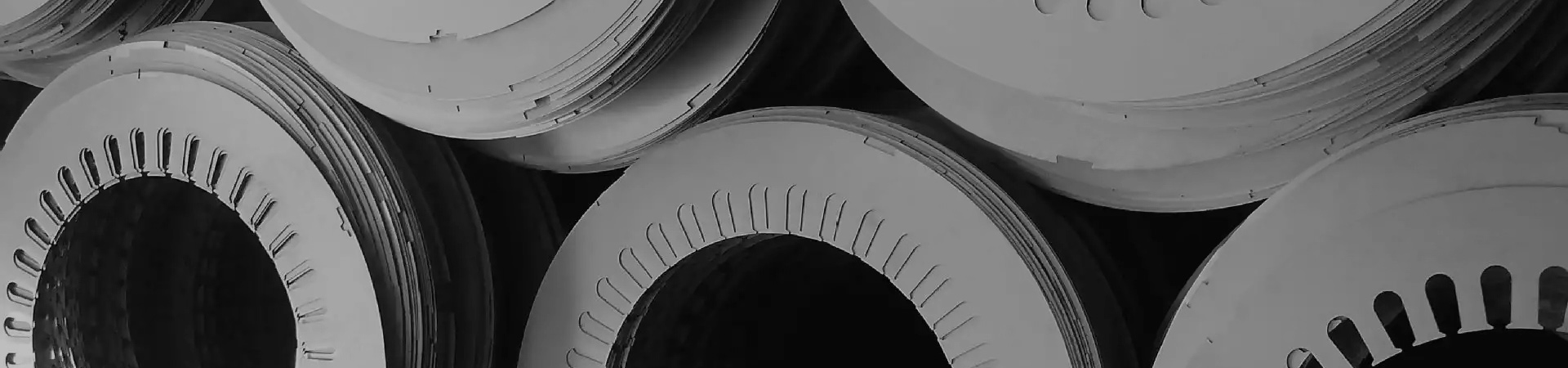
모터 로터
Motor Rotor: Design, Function, and Applications The motor rotor is a critical component in electric motors, serving as the rotating part that converts electrical energy into mechanical motion. It works in conjunction with the stator (the stationary part) to generate torque, enabling the motor to drive various mechanical systems. Rotors are found in a wide range of motor types, including induction motors, synchronous motors, and brushless DC motors, each with unique design considerations. Design and Construction The rotor’s design varies depending on the motor type. In induction motors, the rotor is typically a squirrel-cage design, consisting of laminated steel cores with conductive bars (usually aluminum or copper) short-circuited by end rings. This simple, robust construction ensures reliability and low maintenance. In synchronous motors, the rotor may feature permanent magnets or wound coils excited by DC current to maintain synchronization with the stator’s magnetic field. Brushless DC motors often use permanent magnet rotors for high efficiency and precise control. Key materials include: - Laminated steel cores – Reduce eddy current losses. - Conductive bars/windings – Facilitate current flow and magnetic field generation. - Permanent magnets (in PM motors) – Provide a strong, consistent magnetic field. Function and Working Principle When an AC or DC supply energizes the stator, it creates a rotating magnetic field. In induction motors, this field induces currents in the rotor (via electromagnetic induction), generating torque. In synchronous and brushless DC motors, the rotor’s magnetic field locks with the stator’s field, ensuring precise speed control. Applications Rotors are essential in: - Industrial machinery (pumps, compressors, conveyors). - Automotive systems (electric vehicles, power steering). - Household appliances (fans, washing machines). - Renewable energy systems (wind turbine generators). Challenges and Innovations Modern rotors face challenges like heat dissipation, mechanical stress, and efficiency optimization. Advances include high-temperature superconductors, advanced cooling techniques, and lightweight composite materials to enhance performance. Conclusion The motor rotor is a fundamental element in electromechanical systems, with its design tailored to specific operational needs. Continuous improvements in materials and manufacturing techniques ensure rotors meet the growing demands for efficiency, durability, and precision in modern applications.
제품
범주:
검색 결과가 없습니다!
뉴스
범주:
-
[Company News]모터 고정자와 모터 로터의 주요 차이점 설명
2025-09-30 16:19:08 -
[Industry News]모터 로터 속도가 에너지 효율에 미치는 영향
2025-10-07 16:34:38
케이스
범주:
검색 결과가 없습니다!
비디오
범주:
검색 결과가 없습니다!
다운로드
범주:
검색 결과가 없습니다!
모집
범주:
검색 결과가 없습니다!
추천 제품
검색 결과가 없습니다!
 모바일: +86 13738592999
 전화: +86(576) 89307999
 이메일: sales@zjxinzheng.com
 주소: 삼문 해안공업도시



 왓츠앱
왓츠앱 핸드폰
핸드폰