
 English
 Pусский
 Tiếng Việt
 中文
中文

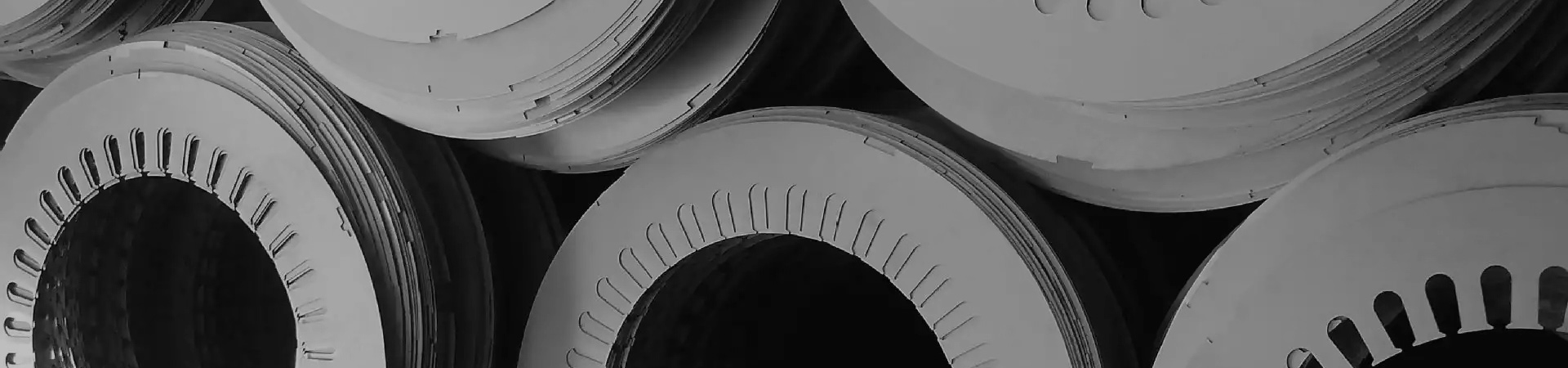
모터 코어 표면 처리
Motor Core Surface Treatment: Enhancing Performance and Durability The surface treatment of motor cores is a critical process in the manufacturing of electric motors, as it directly impacts performance, efficiency, and longevity. Motor cores, typically made from laminated electrical steel sheets, require specialized surface treatments to minimize energy losses, prevent corrosion, and improve mechanical properties. Below are key aspects of motor core surface treatment and their significance. 1. Insulation Coating One of the primary treatments involves applying an insulating coating to the laminated steel sheets. This coating serves multiple purposes: - Reduces Eddy Current Losses: By electrically isolating each lamination, the coating prevents eddy currents that cause energy dissipation and heat generation. - Enhances Thermal Conductivity: Some coatings improve heat dissipation, ensuring the motor operates within optimal temperature ranges. - Improves Adhesion: Certain coatings enhance the bonding between laminations, reducing vibration and noise. Common insulation methods include organic coatings (e.g., epoxy or enamel) and inorganic coatings (e.g., ceramic or phosphate-based layers). 2. Corrosion Protection Motor cores are often exposed to harsh environments, making corrosion resistance essential. Surface treatments such as: - Phosphating or Chromating: Forms a protective layer that inhibits rust. - Zinc or Nickel Plating: Provides a durable barrier against moisture and chemicals. These treatments extend the motor’s lifespan, especially in automotive or industrial applications. 3. Stress Relief and Surface Smoothing During stamping or machining, motor cores may develop micro-cracks or burrs. Surface treatments like: - Shot Peening: Alleviates residual stresses and improves fatigue resistance. - Electropolishing: Removes surface imperfections, reducing friction and wear. Such processes enhance mechanical stability and reduce magnetic losses. 4. Thermal Spray Coatings For high-performance motors, thermal spray techniques (e.g., plasma or HVOF spraying) apply wear-resistant materials like tungsten carbide or ceramics. These coatings: - Reduce Abrasion: Protect against mechanical wear in high-speed applications. - Maintain Dimensional Stability: Prevent deformation under thermal or mechanical stress. 5. Laser or Chemical Etching Precision surface treatments, such as laser etching or chemical patterning, can optimize magnetic flux distribution. These methods: - Enhance Magnetic Properties: Reduce hysteresis losses by refining the grain structure. - Enable Custom Designs: Allow for tailored surface textures to improve cooling or electromagnetic performance. Conclusion Motor core surface treatment is a multifaceted process that significantly influences motor efficiency, durability, and reliability. By selecting the appropriate coating or treatment—whether for insulation, corrosion resistance, stress relief, or thermal management—manufacturers can optimize motor performance for diverse applications. Advances in materials and coating technologies continue to drive innovation, ensuring motors meet the demands of modern industries.
제품
범주:
검색 결과가 없습니다!
뉴스
범주:
-
[Industry News]지속 가능한 기술에서 모터 코어 소재의 미래
2025-10-07 17:01:25
케이스
범주:
검색 결과가 없습니다!
비디오
범주:
검색 결과가 없습니다!
다운로드
범주:
검색 결과가 없습니다!
모집
범주:
검색 결과가 없습니다!
추천 제품
검색 결과가 없습니다!
 모바일: +86 13738592999
 전화: +86(576) 89307999
 이메일: sales@zjxinzheng.com
 주소: 삼문 해안공업도시



 왓츠앱
왓츠앱 핸드폰
핸드폰