
 English
 Pусский
 Tiếng Việt
 中文
中文

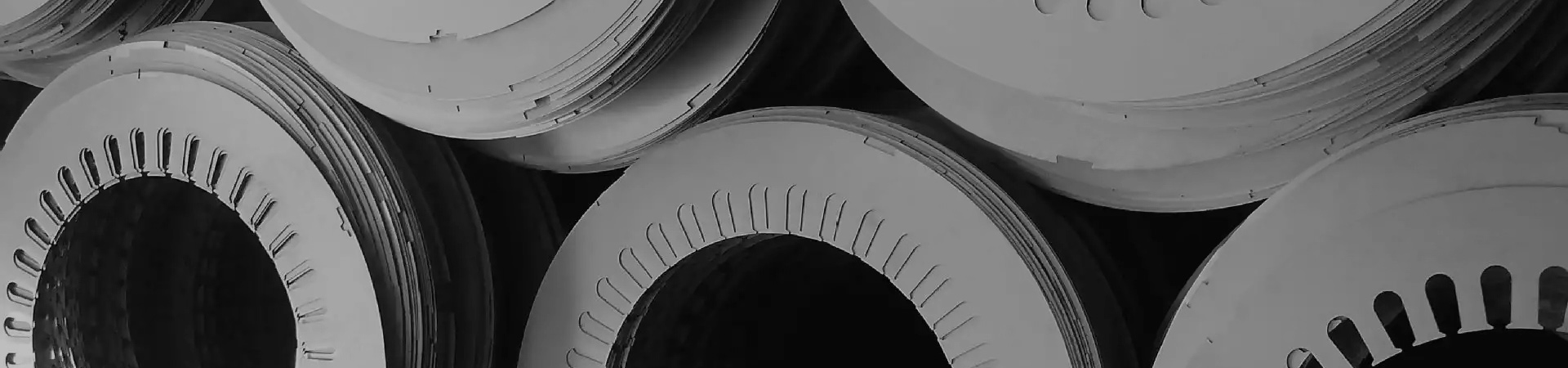
모터 코어 열 방출
Motor Core Heat Dissipation Heat dissipation in motor cores is a critical aspect of motor design, directly impacting performance, efficiency, and longevity. The motor core, typically made of laminated electrical steel, generates heat due to hysteresis losses, eddy current losses, and resistive heating from windings. Effective heat dissipation ensures stable operation, prevents thermal degradation of materials, and maintains optimal efficiency. Sources of Heat in Motor Cores 1. Hysteresis Losses – Occurs due to the cyclic magnetization and demagnetization of the core material, converting magnetic energy into heat. 2. Eddy Current Losses – Induced currents in the core material generate resistive heating, mitigated by using thin laminations with insulating coatings. 3. Copper Losses – Heat from the windings conducts into the core, raising its temperature. Heat Dissipation Mechanisms 1. Conduction – Heat transfers from the core to the motor housing via direct contact. High-thermal-conductivity materials (e.g., aluminum housings) improve conduction. 2. Convection – Air or liquid cooling removes heat from the motor surface. Natural convection relies on ambient airflow, while forced convection uses fans or liquid cooling for higher efficiency. 3. Radiation – Infrared emission from the motor surface contributes minimally but becomes significant in high-temperature environments. Design Considerations for Improved Heat Dissipation - Core Material Selection – Low-loss electrical steel reduces hysteresis and eddy current losses. - Lamination Thickness – Thinner laminations decrease eddy current losses. - Cooling System Integration – Fins, heat sinks, or liquid cooling channels enhance heat transfer. - Thermal Interface Materials – Thermal pastes or pads improve conduction between the core and housing. - Ventilation Design – Optimized airflow paths prevent hot spots. Challenges and Solutions - High Power Density Motors – Generate more heat, requiring advanced cooling (e.g., oil immersion or direct liquid cooling). - Compact Designs – Limited space necessitates efficient thermal management strategies, such as integrated cooling channels. - Material Limitations – High-temperature insulation materials may be needed to withstand thermal stress. Conclusion Effective heat dissipation in motor cores is essential for reliability and efficiency. By optimizing core materials, cooling methods, and thermal pathways, engineers can enhance performance while preventing overheating-related failures. Future advancements in cooling technologies and materials will further improve motor thermal management.
제품
범주:
검색 결과가 없습니다!
뉴스
범주:
-
[FAQ]모터 코어 결함 검사 및 테스트 방법
2025-10-07 16:31:12
케이스
범주:
검색 결과가 없습니다!
비디오
범주:
검색 결과가 없습니다!
다운로드
범주:
검색 결과가 없습니다!
모집
범주:
검색 결과가 없습니다!
추천 제품
검색 결과가 없습니다!
 모바일: +86 13738592999
 전화: +86(576) 89307999
 이메일: sales@zjxinzheng.com
 주소: 삼문 해안공업도시



 왓츠앱
왓츠앱 핸드폰
핸드폰