
 English
 Pусский
 Tiếng Việt
 中文
中文

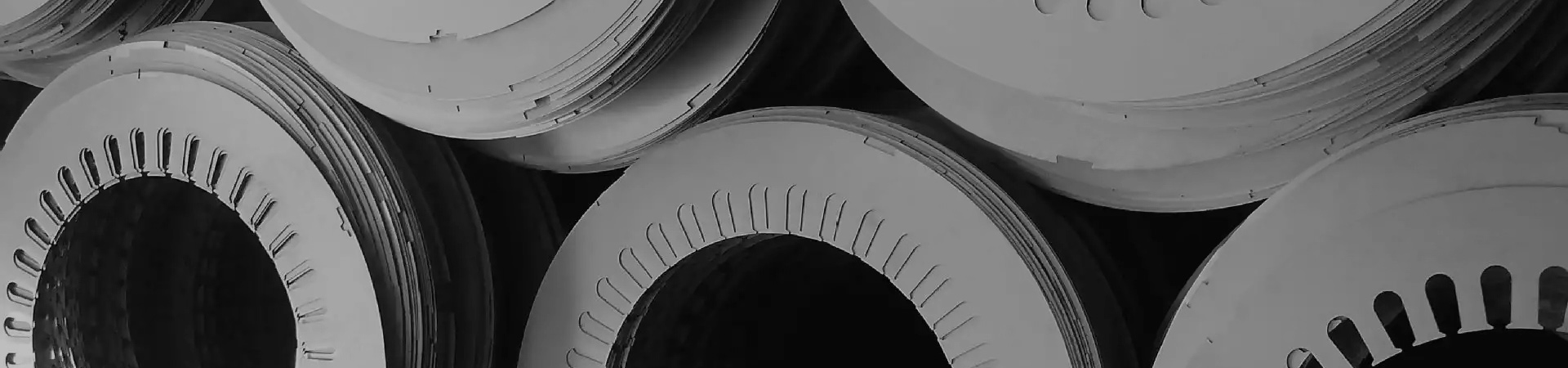
Low carbon steel YE5 motor laminations manufacturing
Manufacturing of Low Carbon Steel YE5 Motor Laminations The production of low carbon steel laminations for YE5 motors involves a series of precise and controlled processes to ensure high efficiency, reduced energy loss, and optimal magnetic performance. Low carbon steel is widely used in motor laminations due to its excellent magnetic properties, low hysteresis loss, and cost-effectiveness. Below is an overview of the key manufacturing steps: 1. Material Selection The process begins with selecting high-quality low carbon steel (typically with a carbon content below 0.1%). The steel must have high magnetic permeability, low coercivity, and minimal impurities to minimize eddy current losses. Silicon may be added to enhance resistivity and reduce core losses. 2. Coil Slitting The steel is supplied in large coils, which are slit into narrower strips of the required width using precision slitting machines. This step ensures uniform dimensions for subsequent stamping. 3. Blanking and Stamping The slit steel strips are fed into high-speed progressive stamping dies, which punch out the lamination profiles. The dies are designed to produce the exact shape of the motor stator and rotor laminations with tight tolerances. Advanced stamping techniques minimize burrs and ensure smooth edges to prevent short-circuiting between layers. 4. Heat Treatment (Annealing) After stamping, the laminations undergo annealing—a heat treatment process that relieves internal stresses caused by mechanical deformation. The laminations are heated in a controlled atmosphere (e.g., hydrogen or nitrogen) to restore magnetic properties and improve grain structure. 5. Insulation Coating To further reduce eddy current losses, an insulating coating (such as phosphate, oxide, or organic varnish) is applied to the laminations. This thin dielectric layer prevents electrical contact between stacked laminations while maintaining thermal conductivity. 6. Stacking and Bonding The individual laminations are stacked and aligned precisely to form the motor core. They may be bonded using adhesives, interlocking tabs, or welding (though welding is minimized to avoid magnetic degradation). Proper stacking ensures uniform magnetic flux distribution. 7. Quality Control Throughout the process, rigorous quality checks are performed, including dimensional inspection, coating thickness measurement, and magnetic property testing. Eddy current testers and visual inspections ensure defect-free laminations. 8. Final Assembly The finished lamination stacks are assembled into motor stators or rotors, where they interact with windings to produce efficient electromagnetic performance. Advantages of Low Carbon Steel in YE5 Motors - High Efficiency: Low core losses improve motor energy efficiency. - Cost-Effective: Low carbon steel is economical compared to specialized alloys. - Durability: Proper annealing enhances mechanical strength and longevity. By optimizing material selection, stamping precision, and insulation techniques, manufacturers ensure that low carbon steel YE5 motor laminations meet stringent performance standards for modern electric motors.
제품
범주:
-
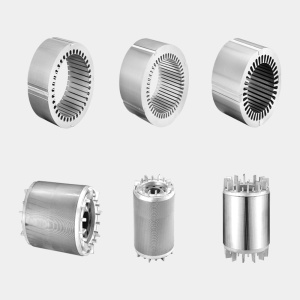
모터 고정자 로터 적층
분류: 고정자와 회 전자조회수: 233번호:릴리스 시간: 2025-10-07 08:41:53모터 고정자, 회전자 및 적층 이해: 전기 모터의 주요 구성 요소전기 모터는 현대 기술의 기본이며 가전제품부터 산업용 기계까지 모든 것에 전력을 공급합니다. 이러한 모터의 중심에는 고정자, 회전자, 적층과 같은 중요한 구성 요소가 있으며, 각 구성 요소는 전기 에너지를 기계 동작으로 변환하는 데 중요한 역할을 합니다. 이 기사에서는 모터 성능에 있어 이러한 요소의 설계, 기능 및 중요성을 살펴봅니다.1. 고정자: 고정 코어고정자는 전기 모터의 고정 부분으로, 일반적으로 구리 권선을 고정하기 위한 균일한 간격의 슬롯이 있는 원통형 코어로 구성됩니다. 전원이 공급되면 이러한 권선은 회전 자기장을 생성하고, 이는 회전자와 상...
뉴스
범주:
검색 결과가 없습니다!
케이스
범주:
검색 결과가 없습니다!
비디오
범주:
검색 결과가 없습니다!
다운로드
범주:
검색 결과가 없습니다!
모집
범주:
검색 결과가 없습니다!
추천 제품
검색 결과가 없습니다!
 모바일: +86 13738592999
 전화: +86(576) 89307999
 이메일: sales@zjxinzheng.com
 주소: 삼문 해안공업도시



 왓츠앱
왓츠앱 핸드폰
핸드폰