
 English
 Pусский
 Tiếng Việt
 中文
中文

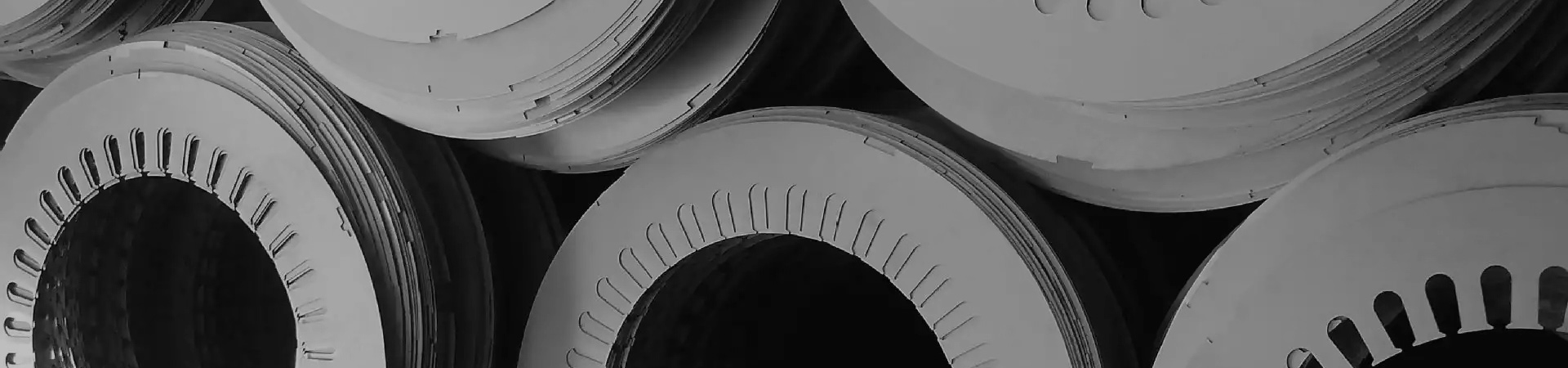
High-temperature resistant YE4 motor laminations materials
High-Temperature Resistant YE4 Motor Laminations Materials High-temperature resistant laminations are critical for improving the efficiency and durability of electric motors, particularly in demanding applications such as industrial machinery, automotive systems, and renewable energy equipment. The YE4 motor, a premium efficiency motor, requires advanced lamination materials that can withstand elevated temperatures while minimizing energy losses. Key Material Requirements 1. Thermal Stability – The laminations must maintain mechanical and magnetic properties at high operating temperatures, typically up to 200°C or more, without significant degradation. 2. Low Core Losses – High-frequency operation and elevated temperatures increase hysteresis and eddy current losses, so low-loss materials are essential for efficiency. 3. High Saturation Flux Density – The material should sustain strong magnetic fields without excessive core heating. 4. Mechanical Strength – Laminations must resist deformation and brittleness under thermal cycling. Common Materials Used - Silicon Steel (Electrical Steel) – The most widely used material, available in non-oriented (NOES) and grain-oriented (GOES) forms. High-silicon content (3-6.5%) reduces eddy current losses. - Amorphous Alloys – These offer extremely low core losses due to their disordered atomic structure, making them suitable for high-efficiency motors. However, they are more brittle and expensive. - Nanocrystalline Alloys – Provide excellent thermal stability and low losses, but cost and manufacturing complexity limit widespread use. - Cobalt-Iron Alloys – High saturation flux density and good thermal resistance, but they are expensive and typically used in specialized applications. Manufacturing Considerations - Insulation Coatings – A high-temperature-resistant insulating layer (e.g., phosphate, ceramic, or organic coatings) is applied to reduce interlaminar eddy currents. - Thickness Optimization – Thinner laminations (0.1-0.35 mm) reduce eddy current losses but increase manufacturing costs. - Annealing Process – Stress relief annealing improves magnetic properties by reducing internal stresses from cutting and stamping. Challenges & Future Trends - Balancing cost, performance, and manufacturability remains a challenge. - Advanced materials like soft magnetic composites (SMCs) and high-silicon steels with improved thermal resistance are being developed. - Additive manufacturing may enable complex lamination geometries for better thermal management. In summary, high-temperature-resistant laminations for YE4 motors require a combination of thermal stability, low losses, and mechanical durability. Ongoing material innovations will further enhance motor efficiency and reliability in extreme environments.
제품
범주:
-
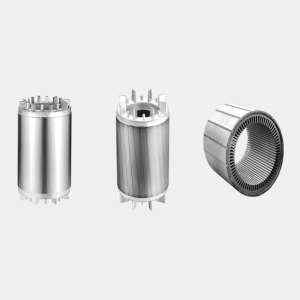
전기 모터 고정자 로터
분류: 고정자와 회 전자조회수: 115번호:릴리스 시간: 2025-10-07 08:45:12전기 모터 고정자 및 회전자: 전자기계 시스템의 핵심 구성요소전기 모터는 현대 기술의 기본이며 가전제품부터 산업용 기계까지 모든 것에 전력을 공급합니다. 모든 전기 모터의 중심에는 고정자와 회전자라는 두 가지 중요한 구성 요소가 있습니다. 이러한 부품은 함께 작동하여 전기 에너지를 기계적 동작으로 변환합니다. 전기 모터의 작동 방식을 이해하려면 설계, 기능 및 상호 작용을 이해하는 것이 필수적입니다.1. 고정자와 회전자 소개고정자는 전기 모터의 고정 부분이고 회전자는 회전하는 구성 요소입니다. 이들은 함께 전기기계 에너지 변환의 핵심을 형성합니다. 고정자는 회전자와 상호 작용하여 토크를 생성하는 자기장을 생성...
뉴스
범주:
검색 결과가 없습니다!
케이스
범주:
검색 결과가 없습니다!
비디오
범주:
검색 결과가 없습니다!
다운로드
범주:
검색 결과가 없습니다!
모집
범주:
검색 결과가 없습니다!
추천 제품
검색 결과가 없습니다!
 모바일: +86 13738592999
 전화: +86(576) 89307999
 이메일: sales@zjxinzheng.com
 주소: 삼문 해안공업도시



 왓츠앱
왓츠앱 핸드폰
핸드폰