
 English
 Pусский
 Tiếng Việt
 中文
中文

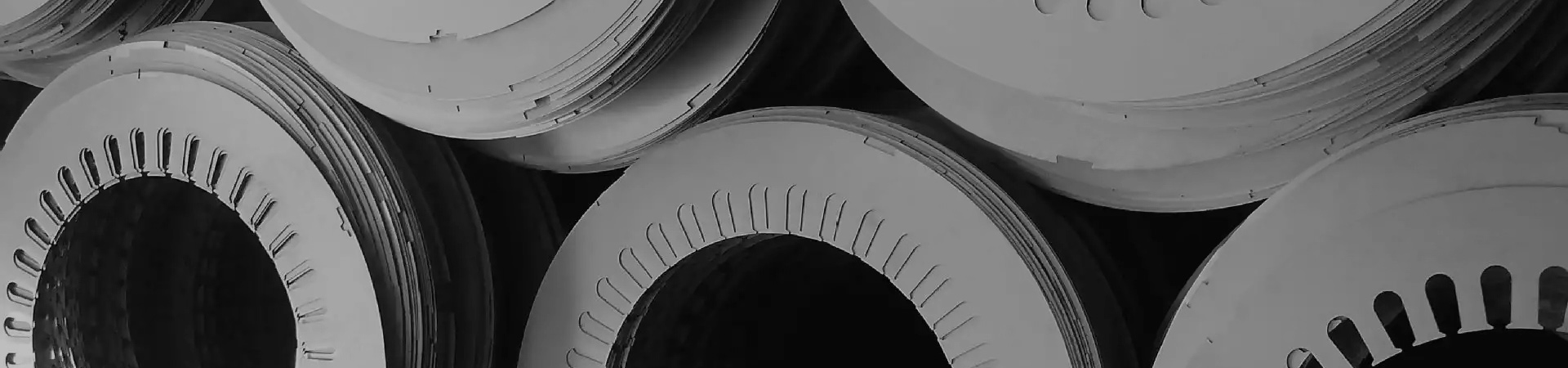
High-temperature resistant YE4 motor laminations design
Design of High-Temperature Resistant YE4 Motor Laminations The design of high-temperature resistant laminations for YE4 motors is critical to ensure optimal performance, energy efficiency, and durability under elevated operating conditions. These laminations must address thermal stability, core losses, and mechanical integrity while meeting stringent efficiency standards. Below are the key considerations in their design: 1. Material Selection The core material must exhibit low core losses and high thermal resistance. Silicon steel (electrical steel) with a high silicon content (typically 2-3%) is commonly used due to its excellent magnetic properties and reduced hysteresis losses. For high-temperature applications, grain-oriented or non-oriented silicon steel with improved thermal stability is preferred. Advanced coatings, such as inorganic insulation layers, are applied to minimize eddy current losses and withstand temperatures exceeding 200°C. 2. Lamination Thickness and Stacking Thinner laminations (typically 0.35mm or 0.5mm) reduce eddy current losses, but the trade-off between manufacturing complexity and performance must be balanced. The stacking process must ensure tight tolerances to prevent air gaps, which can increase magnetic reluctance and heat generation. Laser cutting or precision stamping is employed to maintain dimensional accuracy. 3. Insulation and Coating High-temperature-resistant insulation coatings, such as phosphate or ceramic-based layers, are applied to prevent interlamination short circuits. These coatings must remain stable under thermal cycling and mechanical stress. Additionally, oxidation-resistant treatments are used to protect the laminations in harsh environments. 4. Thermal Management Integration The lamination design should facilitate efficient heat dissipation. Ventilation slots or cooling ducts may be incorporated into the stator core to enhance airflow. The use of thermally conductive adhesives or bonding techniques can improve heat transfer from the core to the motor housing. 5. Mechanical Robustness High temperatures can cause thermal expansion, leading to deformation. The lamination design must account for thermal stress by selecting materials with matched coefficients of thermal expansion. Precision stacking and clamping mechanisms ensure structural integrity under thermal cycling. 6. Efficiency Optimization To meet IE4 efficiency standards, the core losses (hysteresis and eddy current losses) must be minimized. This involves optimizing the magnetic flux path, reducing harmonic losses, and ensuring uniform material properties. Finite element analysis (FEA) is often used to simulate performance under high-temperature conditions. Conclusion The design of high-temperature-resistant YE4 motor laminations requires a multidisciplinary approach, combining advanced materials, precision manufacturing, and thermal management strategies. By focusing on low-loss materials, robust insulation, and efficient cooling, these laminations can deliver reliable performance in demanding applications while maintaining energy efficiency. Future advancements may explore nanocrystalline alloys or hybrid materials for even higher temperature resistance and reduced losses.
제품
범주:
-
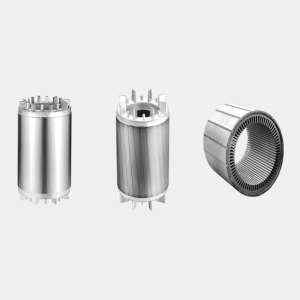
전기 모터 고정자 로터
분류: 고정자와 회 전자조회수: 115번호:릴리스 시간: 2025-10-07 08:45:12전기 모터 고정자 및 회전자: 전자기계 시스템의 핵심 구성요소전기 모터는 현대 기술의 기본이며 가전제품부터 산업용 기계까지 모든 것에 전력을 공급합니다. 모든 전기 모터의 중심에는 고정자와 회전자라는 두 가지 중요한 구성 요소가 있습니다. 이러한 부품은 함께 작동하여 전기 에너지를 기계적 동작으로 변환합니다. 전기 모터의 작동 방식을 이해하려면 설계, 기능 및 상호 작용을 이해하는 것이 필수적입니다.1. 고정자와 회전자 소개고정자는 전기 모터의 고정 부분이고 회전자는 회전하는 구성 요소입니다. 이들은 함께 전기기계 에너지 변환의 핵심을 형성합니다. 고정자는 회전자와 상호 작용하여 토크를 생성하는 자기장을 생성...
뉴스
범주:
검색 결과가 없습니다!
케이스
범주:
검색 결과가 없습니다!
비디오
범주:
검색 결과가 없습니다!
다운로드
범주:
검색 결과가 없습니다!
모집
범주:
검색 결과가 없습니다!
추천 제품
검색 결과가 없습니다!
 모바일: +86 13738592999
 전화: +86(576) 89307999
 이메일: sales@zjxinzheng.com
 주소: 삼문 해안공업도시



 왓츠앱
왓츠앱 핸드폰
핸드폰