
 English
 Pусский
 Tiếng Việt
 中文
中文

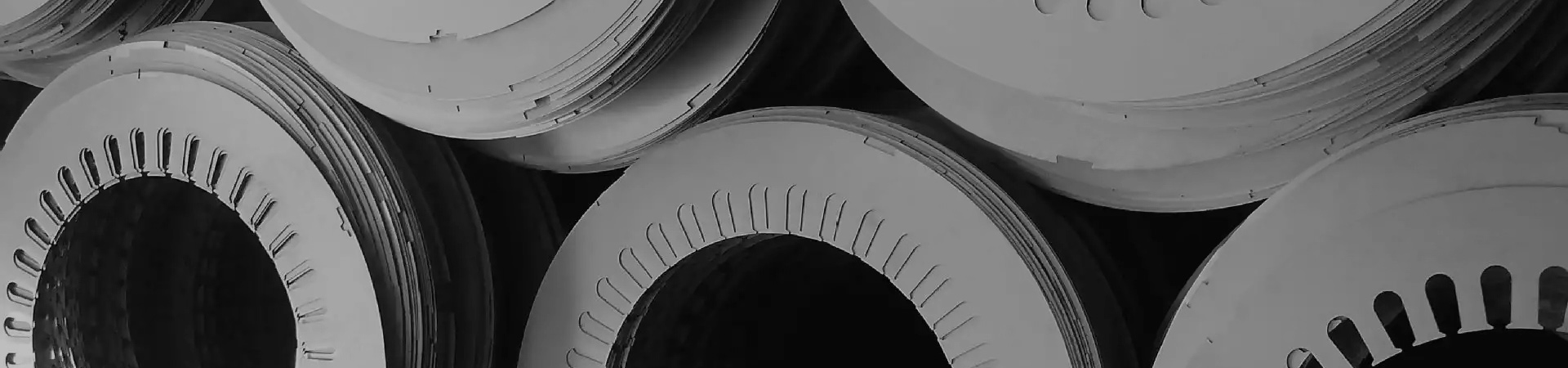
High-efficiency YVF2 motor laminations design
High-Efficiency YVF2 Motor Laminations Design The design of laminations for high-efficiency YVF2 motors plays a critical role in optimizing performance, reducing energy losses, and enhancing thermal management. Laminations are thin, stacked steel sheets that form the stator and rotor cores, minimizing eddy current losses while ensuring efficient magnetic flux distribution. Key considerations in their design include material selection, geometric optimization, and manufacturing precision. 1. Material Selection High-grade electrical steel, such as non-oriented silicon steel (NO20 or NO30), is typically used for YVF2 motor laminations due to its low core loss and high magnetic permeability. The silicon content (2-3.5%) reduces hysteresis losses, while thin gauge thickness (0.35mm or 0.5mm) minimizes eddy currents. Advanced coatings (e.g., C3 or C5 insulation) are applied to enhance interlamination resistance and prevent short-circuiting. 2. Geometric Optimization The lamination profile is designed to maximize magnetic efficiency and mechanical stability. Key features include: - Slot Design: Stator slots are optimized for winding distribution, balancing copper fill factor and magnetic saturation. Semi-closed or closed slots reduce cogging torque and improve sinusoidal flux distribution. - Pole Configuration: The number of poles (e.g., 4-pole or 6-pole) is selected based on speed and torque requirements, with careful attention to flux path continuity. - Tooth and Yoke Dimensions: Proper tooth width ensures sufficient mechanical strength while avoiding excessive magnetic saturation. The yoke thickness is calculated to maintain uniform flux density. 3. Manufacturing Precision High-precision stamping or laser cutting ensures tight tolerances (≤20µm) and smooth edges, reducing air gaps and magnetic reluctance. Stacking methods (interlocking, welding, or bonding) maintain alignment and minimize vibration. Annealing may be applied to relieve stress and improve magnetic properties. 4. Loss Reduction Techniques - Segmented Laminations: Reduces circulating currents in large motors. - Skewed Slots: Mitigates torque ripple and harmonics. - Asymmetric Designs: Improves efficiency under variable load conditions. 5. Thermal and Mechanical Considerations Laminations must withstand thermal expansion and electromagnetic forces. Ventilation ducts may be integrated to enhance cooling. In summary, YVF2 motor lamination design combines advanced materials, precision engineering, and electromagnetic optimization to achieve high efficiency, low noise, and long service life. Future trends include the use of amorphous alloys and additive manufacturing for further performance gains.
제품
범주:
-
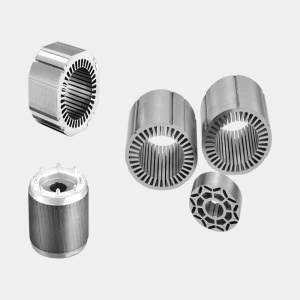
신에너지 자동차 모터 고정자 로터
분류: 고정자와 회 전자조회수: 268번호:릴리스 시간: 2025-10-07 08:57:44신에너지 자동차 모터 고정자 및 회전자: 전기 추진 시스템의 핵심 구성요소신에너지 차량(NEV) 산업의 급속한 성장으로 인해 전기 추진 시스템의 핵심 부품, 특히 모터 고정자와 회전자가 상당한 관심을 받게 되었습니다. 이러한 구성 요소는 전기 에너지를 기계적 동작으로 변환하는 데 중요한 역할을 하며 전기 자동차(EV)의 효율성, 성능 및 신뢰성에 직접적인 영향을 미칩니다. 이 기사에서는 NEV 모터의 고정자 및 회전자와 관련된 설계, 재료, 제조 공정 및 기술 발전을 살펴봅니다.1. NEV 모터 고정자 및 회전자 소개신에너지 차량의 전기 모터는 고정자(고정 부분)와 회전자(회전 부분) 사이의 상호 작용에 의존하여 토크를 생성합니다....
뉴스
범주:
검색 결과가 없습니다!
케이스
범주:
검색 결과가 없습니다!
비디오
범주:
검색 결과가 없습니다!
다운로드
범주:
검색 결과가 없습니다!
모집
범주:
검색 결과가 없습니다!
추천 제품
검색 결과가 없습니다!
 모바일: +86 13738592999
 전화: +86(576) 89307999
 이메일: sales@zjxinzheng.com
 주소: 삼문 해안공업도시



 왓츠앱
왓츠앱 핸드폰
핸드폰