

Electric motors are central to modern industry, transportation, and consumer applications, consuming nearly half of global electricity. As energy efficiency regulations tighten worldwide and companies strive to reduce operational costs, the demand for high-performance, energy-efficient motors is escalating. In this context, Silicon Steel Motor Laminations have become a critical component in achieving superior performance and reduced energy losses.
High-performance motors, including those used in industrial automation, electric vehicles, HVAC systems, and renewable energy applications, rely on laminations to optimize magnetic flux paths and minimize core losses. Manufacturers and OEMs are increasingly seeking laminations that balance electrical efficiency, mechanical strength, and thermal stability. Market trends indicate that precision-engineered silicon steel laminations are essential for compliance with IE3/IE4 efficiency standards, as well as for enhancing reliability in high-speed and high-torque applications.
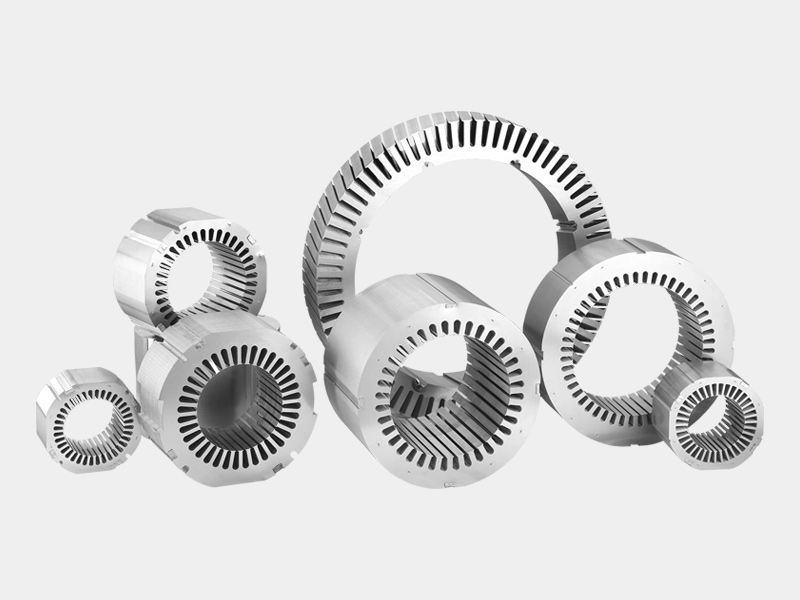
Silicon steel motor laminations are thin sheets of electrical steel designed to form the stator and rotor cores of electric motors. Their primary function is to guide magnetic flux efficiently while reducing energy losses from eddy currents and hysteresis. Two key principles define their performance:
Magnetic Permeability: High-permeability silicon steel provides an efficient magnetic path, allowing motors to operate with lower energy consumption. Non-grain-oriented steel is commonly used for rotating machinery, while grain-oriented steel is more suitable for transformer cores.
Lamination Thickness: Thinner laminations reduce eddy current losses by limiting circulating currents within the core. However, excessively thin sheets can compromise mechanical durability, creating challenges in handling and assembly. Optimal thickness selection is therefore a balance between electrical efficiency and structural integrity.
Advanced manufacturing technologies, including precise rolling, laser cutting, and surface insulation coating, have enhanced the performance of silicon steel laminations. These innovations allow motors to achieve higher efficiency, lower vibration, and extended service life.
Silicon steel laminations feature intricate geometries designed to accommodate motor windings while optimizing magnetic flux. Slots, notches, and teeth are carefully engineered to ensure minimal air gaps, consistent flux distribution, and low vibration. Proper stacking alignment is crucial to maintain magnetic continuity and mechanical stability, particularly in high-speed or high-power applications.
High-quality silicon steel is the foundation of reliable laminations. Typical compositions include 2–3% silicon to reduce hysteresis losses while enhancing tensile strength. Alloying elements and precise chemical control ensure consistent magnetic properties and mechanical durability. Surface insulation coatings, such as phosphate or oxide layers, electrically separate each lamination, preventing eddy currents and enhancing thermal resistance. Coating uniformity and adhesion are vital for long-term performance under high rotational speeds and thermal cycling.
The production of silicon steel motor laminations involves multiple precision-controlled steps:
Cold Rolling: Electrical steel is rolled to a precise thickness, often below 0.35 mm for high-performance motors. This process ensures uniform material properties and strength.
Annealing: Heat treatment relieves internal stresses, optimizes magnetic properties, and prepares the steel for precise cutting or stamping.
Cutting and Stamping: Advanced laser cutting or stamping creates complex shapes while maintaining tight tolerances. Burr-free edges are essential to prevent magnetic leakage and mechanical imbalance.
Insulation Coating: Each lamination receives a durable insulating layer to electrically isolate layers in the stack, maintaining performance even under high temperatures.
Stacking and Core Assembly: Laminations are aligned and assembled using mechanical presses, adhesives, or welding, ensuring a consistent magnetic path and structural integrity.
Silicon steel motor laminations provide:
Reduced Energy Losses: Lower eddy current and hysteresis losses improve motor efficiency.
Enhanced Thermal Management: Efficient flux paths generate less heat, reducing cooling requirements.
Mechanical Durability: Precision manufacturing reduces vibration, noise, and structural fatigue.
Extended Motor Life: Durable coatings and robust materials ensure reliable performance over long operational cycles.
Motor lamination quality is influenced by several factors:
Material Consistency: Variations in silicon content or alloying elements can significantly alter magnetic and mechanical properties.
Thickness Precision: Deviations increase energy losses and may reduce motor efficiency.
Insulation Quality: Poor or uneven coatings can lead to layer short-circuits, overheating, or premature failure.
Stacking Accuracy: Misaligned laminations create gaps in the magnetic path, increasing losses and mechanical stress.
Surface Finish: Burrs, scratches, or deformations from cutting compromise both magnetic performance and assembly reliability.
Stringent quality control at each production stage is essential, particularly for high-speed, high-torque motors where tolerances are minimal and operational demands are severe.
Selecting reliable suppliers for silicon steel laminations is critical for motor manufacturers. Key considerations include:
Material Certification: Compliance with international standards (IEC, ASTM) ensures laminations meet required magnetic and mechanical specifications.
Manufacturing Capabilities: Suppliers should offer advanced rolling, cutting, coating, and annealing processes to maintain thin, precise laminations.
Consistency and Yield: High-quality laminations with minimal defects reduce scrap and manufacturing delays.
Technical Support: Suppliers providing engineering consultation and testing services help optimize lamination design for specific motor applications.
Logistics and Reliability: On-time delivery of large-volume orders is essential for uninterrupted production.
Working with experienced suppliers minimizes risks and ensures consistent quality, especially for applications in electric vehicles, industrial automation, and renewable energy systems.

Despite technological advancements, challenges remain:
Balancing Thinness and Durability: Ultra-thin laminations reduce losses but can be fragile during handling and stacking.
Cost vs. Performance: High-grade silicon steel and advanced coatings increase material costs, requiring careful design-to-cost optimization.
Thermal and Mechanical Stress: Motors in harsh environments are subjected to repeated thermal cycling and vibration, challenging lamination durability.
Supply Chain Constraints: Limited availability of high-quality laminations can cause production bottlenecks.
Addressing these issues requires precision engineering, rigorous quality assurance, and robust supply chain management.
Silicon steel motor laminations are essential for:
Industrial Motors: Pumps, compressors, and conveyors benefit from reduced energy losses and enhanced reliability.
HVAC Systems: Fans and compressors rely on optimized laminations to meet energy efficiency standards while maintaining low noise levels.
Electric Vehicles: Traction motors require lightweight, high-strength laminations to maximize efficiency, torque, and thermal performance.
Renewable Energy: Wind turbines and hydroelectric generators use laminations that minimize losses and improve energy conversion.
Consumer Appliances: High-performance motors in refrigerators, washing machines, and air conditioners deliver energy savings and reduced operational noise.
In each case, the lamination quality directly affects efficiency, longevity, and overall operational costs.
Key trends in silicon steel motor laminations include:
Ultra-Thin Laminations: Advancements allow thicknesses below 0.20 mm, further reducing eddy current losses.
Amorphous and Nanocrystalline Materials: Emerging materials offer near-zero hysteresis losses and improved performance for specialized applications.
Integrated Simulation Tools: Magnetic, thermal, and mechanical modeling enables optimized lamination designs before production.
Sustainable Production: Environmentally friendly steel manufacturing and low-emission coating processes align with global sustainability goals.
High-Speed and EV Applications: Motors for electric aircraft, drones, and automotive traction increasingly demand laminations with superior tensile strength and thermal stability.
As energy efficiency standards become more stringent and electric mobility expands, silicon steel laminations will continue evolving toward thinner, stronger, and more efficient designs.
Q1: Why are silicon steel laminations crucial for motor efficiency?
They minimize eddy current and hysteresis losses in the core, reducing energy consumption and heat generation.
Q2: What materials are typically used?
Non-grain-oriented silicon steel with 2–3% silicon content is common, often coated with phosphate or oxide layers for electrical insulation.
Q3: How does thickness affect performance?
Thinner laminations reduce energy losses but require careful handling to maintain mechanical durability.
Q4: What are common manufacturing challenges?
Maintaining precise thickness, burr-free cutting, uniform insulation coating, and accurate stacking are critical challenges.
Q5: Which industries benefit most?
Industrial manufacturing, HVAC, electric vehicles, renewable energy, and high-performance appliances all benefit from optimized laminations.
Silicon steel motor laminations are a cornerstone of high-performance electric motors, directly influencing efficiency, thermal management, mechanical reliability, and operational lifespan. As global energy efficiency regulations tighten and demand for electrification grows, high-quality laminations remain essential for motor design across industrial, automotive, and renewable energy sectors.
Future advancements will emphasize ultra-thin designs, advanced materials, and environmentally responsible production methods. By integrating precise manufacturing, rigorous quality control, and intelligent material selection, motor designers can achieve energy-efficient, reliable, and durable solutions tailored to modern industrial demands.
 모바일: +86 13738592999
 전화: +86(576) 89307999
 이메일: sales@zjxinzheng.com
 주소: 삼문 해안공업도시
중국 저장성 타이저우시 현
저작권 © Zhejiang Xinzheng Electromechanical Technology Co., Ltd. 모든 권리 보유.
이 웹사이트는 귀하가 당사 웹사이트에서 최상의 경험을 할 수 있도록 쿠키를 사용합니다.

 English
 Pусский
 Tiếng Việt
 中文
中文



 왓츠앱
왓츠앱 핸드폰
핸드폰